Unconditional Enters the University Curriculum
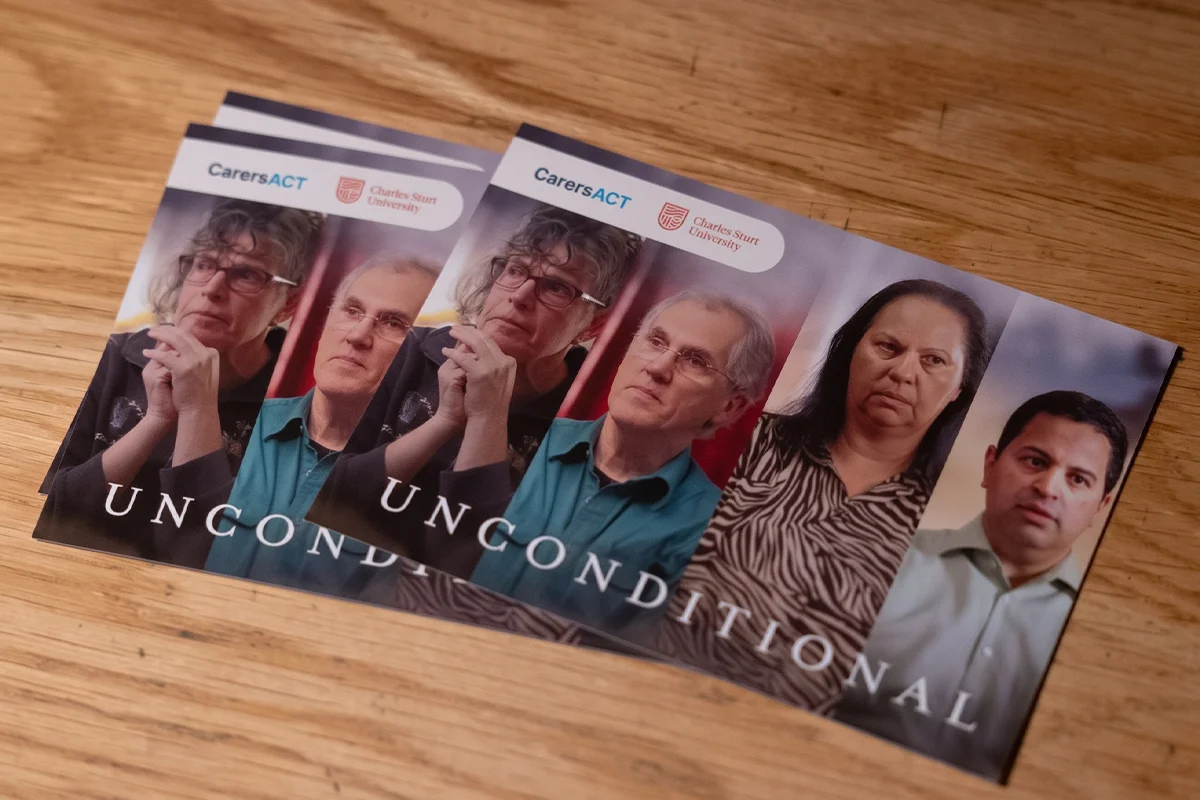
A milestone for creative research, carer voices and social impact
We are delighted to share an important milestone in the journey of Unconditional.
The social impact film, developed as part of Dr Dalanglin Dkhar’s PhD by Creative Research, exploring the lived experience of carers, is now being used as a teaching resource within the university curriculum at Charles Sturt University.
Unconditional has been incorporated into HCS111: Introduction to Human Services, where it is used as a core case study to support students in developing a deeper understanding of the experiences, needs and often unseen realities of carers.
This marks an exciting recognition of the potential of creative research to move beyond traditional academic boundaries — bringing research findings into the classroom through storytelling, lived experience and meaningful human connection.
From research to the classroom
At the heart of Unconditional is an exploration of the often hidden experiences of carers — including the emotional, social and inner dimensions of caring that may remain unseen by the wider community.
In the classroom, the film provides students with an opportunity to engage with these experiences in a way that connects academic learning with real human lives.
Through Unconditional, students are encouraged to consider:
- the hidden and often isolated experiences of primary carers;
- the practical and emotional needs of carers;
- the assumptions and biases that can shape how caring is understood;
- the relationship between policy, systems and lived experience;
- the importance of empathy and emotional intelligence in human service work; and
- the role future professionals can play in recognising, respecting and advocating for carers.
By using cinematic storytelling as a form of research communication, Unconditional creates a bridge between theory and practice. It transforms research and lived experience into a powerful visual case study that can stimulate discussion, reflection and critical thinking.
In Conversation with Dr Monica Short, CSU School of Social Work & Arts
Using Unconditional to teach future human service professionals
We spoke with Dr Monica Short, who has incorporated Unconditional into her teaching in HCS111: Introduction to Human Services, about the value of the research and film for student learning.
What specific aspects of the Unconditional research did you find most compelling for your learning objectives?
Dr Monica Short:
“This is a hard question, because it is all impactful. I think the most compelling aspect of your esteemed Unconditional research is that it brings to light the hidden experiences of carers in Australia.”
Dr Short explains that making these often-unseen experiences visible is particularly important for students preparing for work in human services.
“This helps the students empathise with carers and be mindful of their needs, which is essential for human service work.”
How have you integrated Unconditional into the course?
Dr Monica Short:
“I am using your lived experiences as a carer and your significant Unconditional research as a case study in HCS111 Introduction to Human Services to help people gain a deeper understanding of the needs of carers.”
The film and research are therefore not simply presented as supplementary material. They are used as a meaningful case study through which students can engage with the complexity of the carer experience.
Unconditional explores what the research describes as the “inner life” of the carer. How do you see this informing student engagement and learning?
Dr Monica Short:
“Your story and the Unconditional findings will greatly assist students in deepening their understanding of the carer experience, which they can engage with when working with people who are caring.”
This connection between the inner life of carers and future professional practice is central to the educational value of the film. It invites students to look beyond visible tasks and practical circumstances and consider the emotional and personal realities that can shape a person’s experience of caring.
Where is the work being used within the curriculum?
Dr Monica Short:
“Your beautiful work is included in HCS111 Introduction to Human Services.”
The inclusion of Unconditional in this subject provides students with an opportunity to engage directly with creative research as part of their academic learning and professional development.
Why creative research matters in education
The inclusion of Unconditional in the university curriculum demonstrates the unique contribution that creative research can make to teaching and learning.
A social impact film can bring together research, storytelling and lived experience in ways that help students engage with complex issues on both an intellectual and human level.
Bridging theory and practice
Unconditional provides a rich case study through which students can explore how social systems, policy and human experiences intersect. It helps move learning beyond abstract concepts by placing real lived experience at the centre of discussion.
Fostering empathy and self-reflection
The film brings attention to experiences that can otherwise remain hidden. In doing so, it encourages students to reflect on their own assumptions and develop greater awareness of the needs of people they may work alongside in the future.
Encouraging critical discussion
The use of film can create space for meaningful classroom conversations about systemic gaps, social justice, caring and advocacy. Students are invited not only to understand the issues, but also to think critically about the systems and attitudes that shape the experiences of carers.
Preparing future professionals
For students entering human services and related fields, understanding the lived experience of carers is essential. Unconditional supports the development of empathy, emotional intelligence and a more person-centred approach to future professional practice.
The curriculum use of the film also demonstrates how creative PhD research can extend beyond the university thesis to generate tangible educational and social impact.
A celebration of impact
For Unconditional, becoming part of university teaching is a significant and deeply meaningful milestone.
The journey of the film has always been about more than telling a story. It has been about creating greater understanding of the lived experience of carers, bringing hidden realities into public conversation and contributing to social change.
Its inclusion in the curriculum now enables these conversations to continue with the next generation of human service professionals.
Students are not only learning about carers. Through the research and storytelling of Unconditional, they are invited to engage with the humanity, complexity and often unseen realities of caring.
This is a powerful example of what can happen when research is communicated creatively and when lived experience is recognised as valuable knowledge.
From research. To film. To social impact. To the classroom.
We celebrate this milestone with gratitude and hope — and look forward to seeing how Unconditional continues to inspire learning, reflection, advocacy and meaningful change.